Dragon Copilot In-Room Displays
This was forward-looking design exploration. Hospital rooms are moving toward smart environments with screens that replace bedside computers. The question was: what does Dragon Copilot look like when it's built into the room itself? These concepts became a starting point for Microsoft's future plans.
Ambient Documentation Without Devices
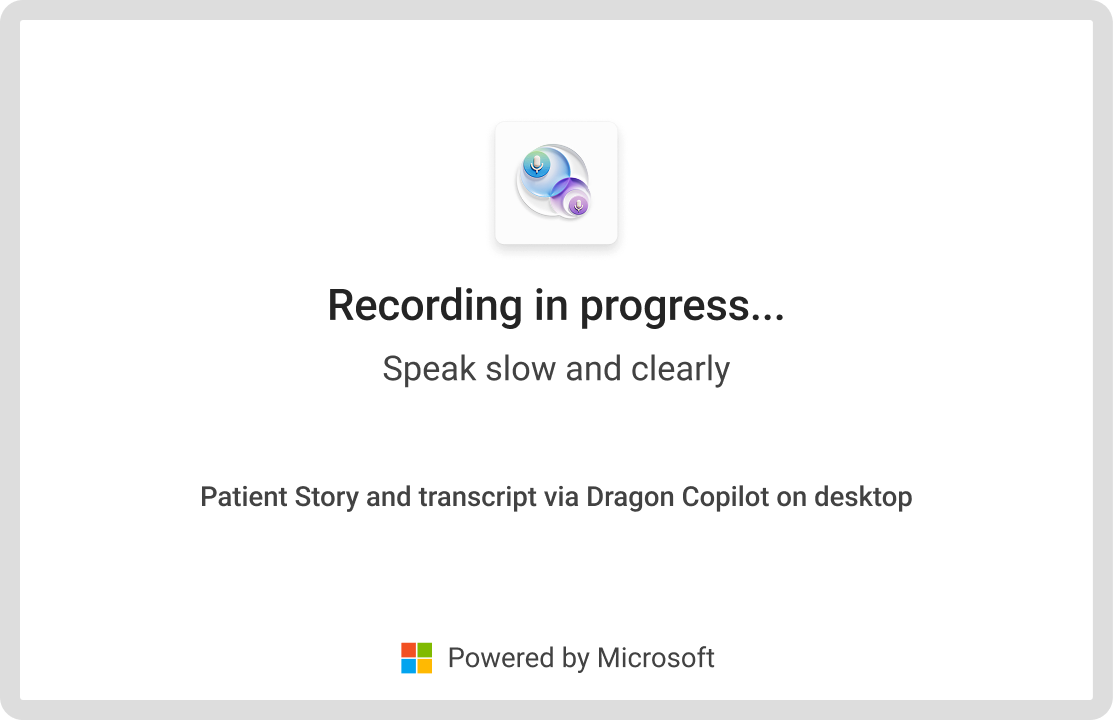
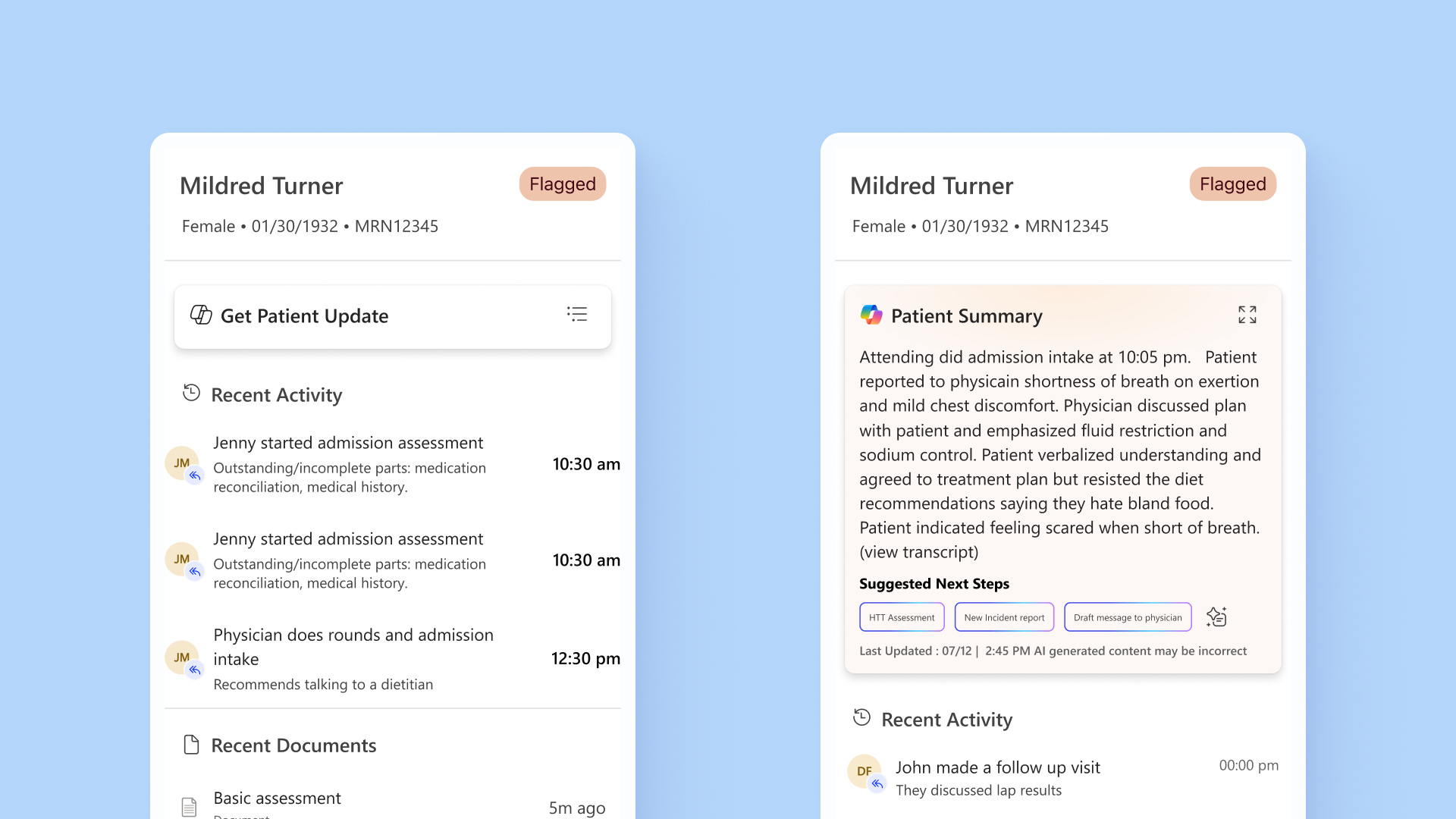
Clinicians walk into a room, authenticate automatically via voice profile and badge, and the room starts listening. No app to open, no login. The display shows patient context and captures the conversation in real time. It had to feel calm and unobtrusive. A room that's aware, not watching.
Interaction Model
Explored voice-only, touch, and hybrid voice-and-touch for different workflows. The tricky part was giving clinicians full control while keeping it unobtrusive for patients. Concepts ranged from minimal ambient indicators (a subtle glow when the system is listening) to full dashboards for documentation review between visits.
Future-Facing Design
This was exploratory, not a shipped product. I delivered multiple concepts covering different levels of ambient intelligence and screen interactivity, all grounded in real nursing and physician workflows from the Dragon Copilot engagement. The goal was to give the team solid design directions for future product decisions.